
Case study
We helped PTM understand their end users and refine their brand messaging to better connect with individual buyers.
PTM had a solid presence in the B2B market, supplying orthopedic supports and braces to orthopedic stores, pharmacies, sports retailers, and distributors across Latin America. As competition in that space became more aggressive, they decided to grow their direct-to-consumer (D2C) channel, but found it hard to stand out.
Their product quality was strong, but decades of working through intermediaries meant they had no direct contact with end users. They didn’t really know who their consumers were, what they needed, or how to speak to them in a way that built trust.
We researched PTM’s actual users by:
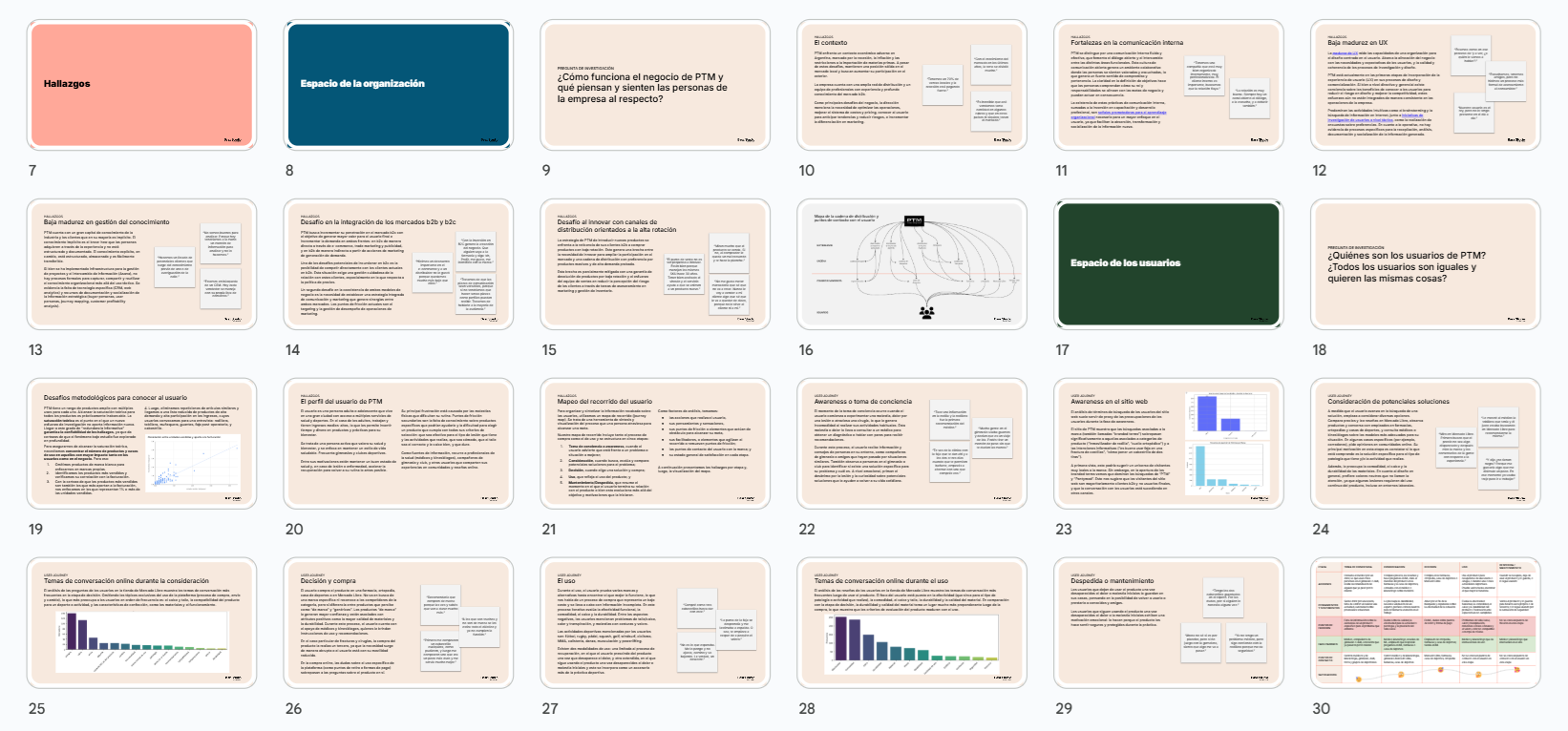
From this, we learned that users don’t recognize specific brands in the category. However, they do differentiate between “branded” and “generic” products, associating positive attributes such as durability with branded items.
Their expectations are based on functional criteria, with the main purchase drivers being effectiveness (fit for the activity or condition), comfort, fit/adjustment, and durability.
Purchase decisions are influenced by authoritative voices like doctors and physiotherapists, gym and club peers, and other users who share their experiences in online communities and reviews.
Based on these insights, we developed a series of targeted recommendations to help PTM align its marketing, communication, and product strategies with user needs and behaviors.
You don’t need a big research budget to unlock big insights.
With the right questions and a smart use of assets you already have (first-party data like emails, search terms, site analytics, and a few well-conducted user interviews) you can uncover patterns that shape the entire customer journey. Add in marketplace reviews and user-generated questions, and you get a real-world, unfiltered view of how your product is perceived, purchased, and used.
Today, research is less about scale and more about focus: learning more with less, by listening better to what’s already being said.