
Case study
We helped Senpex design the content system for its delivery platform. The work focused on improving clarity and consistency, to ensure usability and operational reliability at scale.
Senpex was developing an app to coordinate its last-mile delivery operations. The system had to support three user roles and five service modes, each with specific workflows and requirements.
In early prototypes, terms were used inconsistently. For example, the same concept (the item being delivered) could appear as package, shipment, or parcel depending on the screen. This made it difficult for the product and engineering teams to stay aligned and increased the risk of confusion during design and development.
Senpex needed a unified way to describe its services and operations so that users and internal teams could understand and use the system consistently.
We began by identifying all entities, relationships, and actions involved in each delivery workflow. From there, we created a controlled vocabulary that defined clear names for every object in the system, including people (user roles and status, like sender or receiver), objects (orders, routes, shipments, pick-ups, and drop-offs), and actions (place, confirm, cancel, pay).
This vocabulary was documented in a glossary and used to guide all naming and labeling decisions across the app. We also developed a set of guidelines for structuring and writing in-app content. These standards helped Senpex keep terminology consistent as the product evolved.
We then wrote the interface copy for both app versions (customer and driver), covering onboarding flows, order creation, delivery tracking, payment, and error messages.
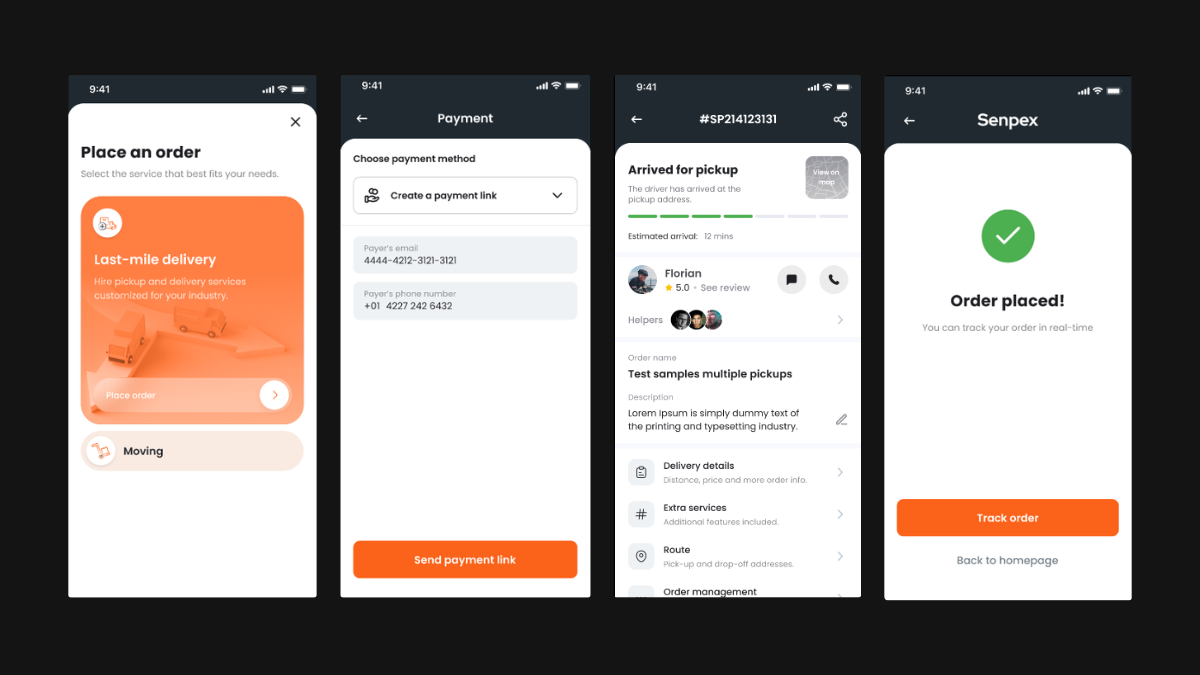
Information architecture is more than a way to keep content consistent. It helps teams see what exists, how it connects, and how it can be managed. It’s where things begin to exist.
Naming structures knowledge, creating the foundation for clarity, consistency, and collaboration. It’s an effective way of supporting both usability and operational reliability as products scale.
Defining a controlled vocabulary early creates a shared reference for everyone working on the product. It helps teams reason about the system with the same terms and ensures that the interface, documentation, and backend stay in sync.